

China
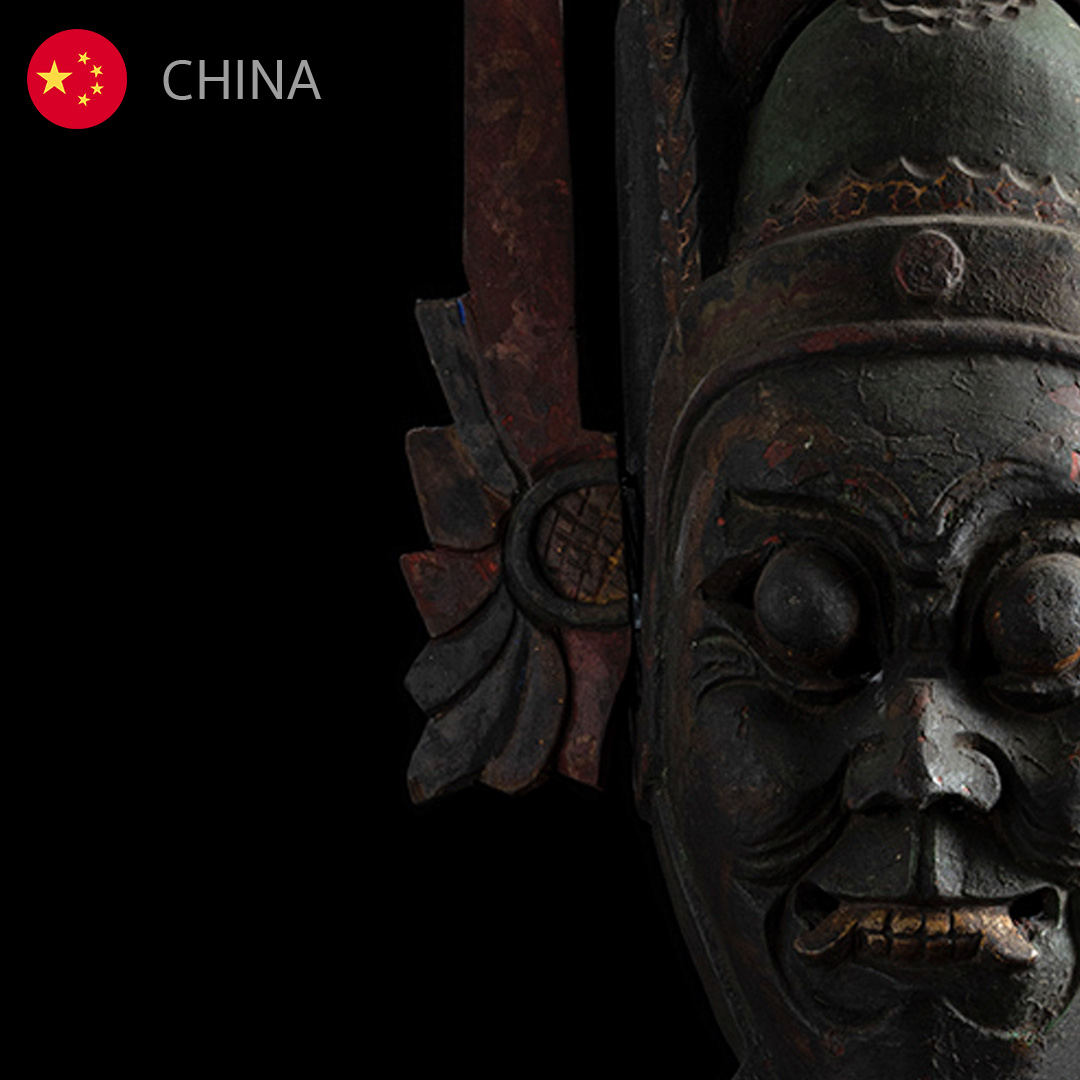
China’s civilization, with a recorded history of more than five thousand years, has long been home to diverse ethnic groups, beliefs, and traditions. Among its many cultural forms, the art of the mask evolved into what is now known worldwide as Chinese opera. In these performances, painted faces replaced physical masks, transforming color and line into symbols of personality, morality, and fate. Each hue represents a distinct character and virtue, creating a visual language that has become one of China’s most recognizable artistic expressions.
Many scholars have conducted extensive research on masks throughout China, compiling large volumes that document the masks of each province and ethnic community. These studies reveal an extraordinary variety of forms and meanings. In some regions, the influence of Buddhism, particularly the Mahāyāna tradition, remains visible. The monk Faxian journeyed to Nālandā in India to bring back Buddhist scriptures and helped spread these teachings across China and Tibet.
Although trade routes linked India and China through the lands of Suvarnabhumi, the spiritual influence of the Indus Valley civilization did not deeply affect ancient Chinese culture. The art of Chinese masks continued to reflect beliefs in the supernatural, in spirits and demons, without adopting the Hindu or Brahmanic deities that shaped the traditions of Southeast Asia.
The masks presented in this exhibition represent only a few of China’s many ethnic groups. They include masks from the Yao people of southern China, the Zhuang of Yunnan and Guangxi, and the Gelao of Guizhou and Hunan. These are known as Nuo Xi masks, traditionally used in villages and rural rituals to drive away misfortune and to protect against disease. Some were carried in processions and were believed to bring blessings to the community. Another type, known as Di Xi, differs in form and purpose. These performances often tell heroic tales of ancient rulers and warriors, created to inspire courage and love for the homeland.
