


LAOS
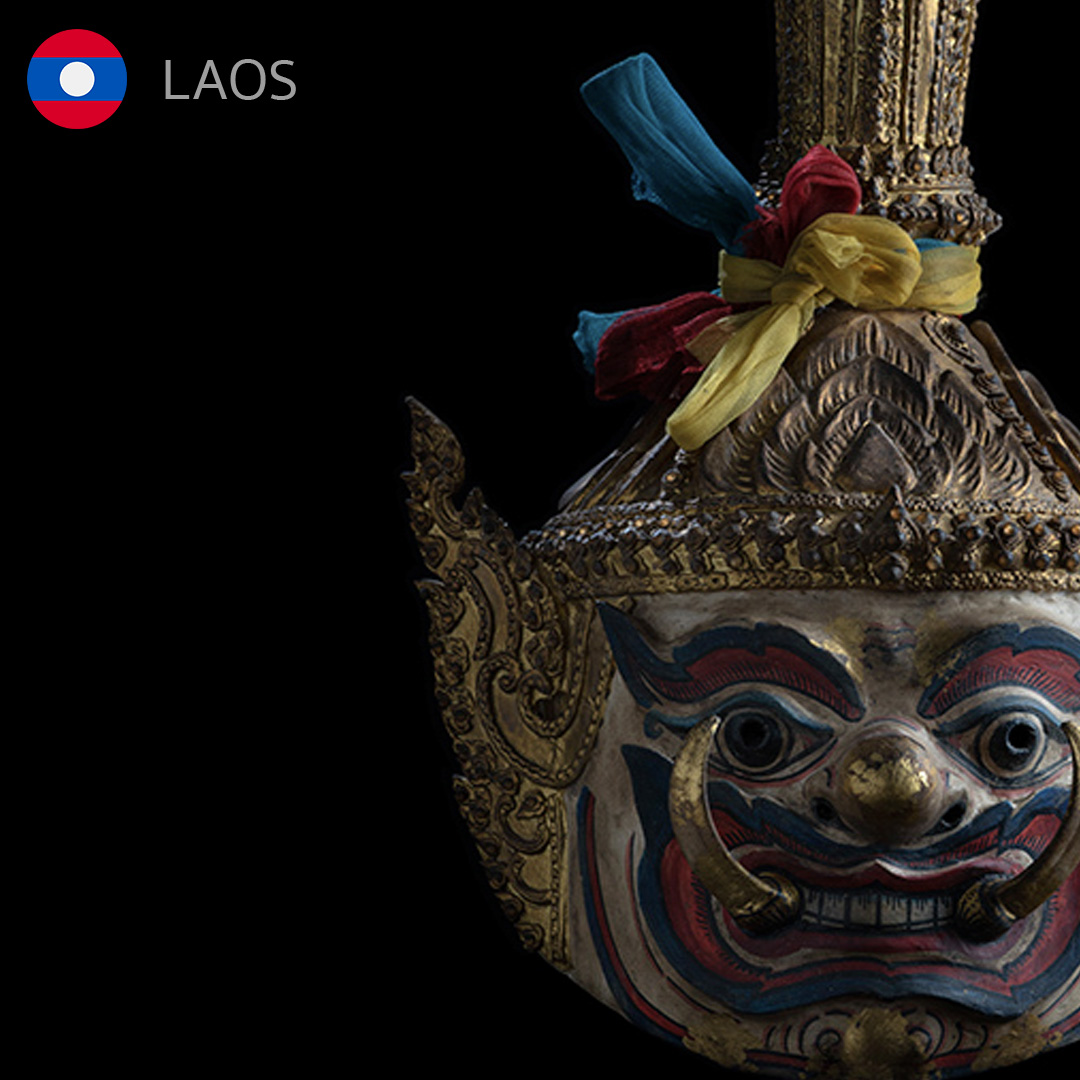
Laos was among the first city-states to absorb the influences of trade, religion, art, and culture that radiated from India. This heritage can still be seen in the ancient architecture that has survived since the periods of Funan and Chenla, which remain important historical landmarks today. One of the most significant is Wat Phou, a temple complex older than Angkor Wat and Angkor Thom. Built around the 10th century CE (B.E. 1543–1643) as a Hindu sanctuary, Wat Phou is now recognized as a UNESCO World Heritage Site.
Its stone carvings and lintels still depict numerous Hindu deities, reflecting the builders’ devotion to Shiva and the Trimurti. By the 13th century CE (B.E. 1743–1843), local rulers had embraced Mahāyāna Buddhism, leading to the creation of Buddhist sculptures that continue to be revered by the Lao people to this day.
The spiritual transmission of both the Mahābhārata and the Rāmāyaṇa deeply shaped the beliefs of Lao rulers and their people. In Laos, the epic became known as Phra Lak Phra Ram. It first appeared in shadow plays and later evolved into local forms of theater. Over time, the royal court began to support these performances, adapting them to reflect Lao beliefs, customs, and imagination.
This development led to Fawn Khon Phra Lak Phra Ram, a distinctive masked dance drama that combined local traditions and creativity. It featured characters beloved in Lao folklore, incorporated moral values and depictions of everyday life, and often used real landscapes and familiar settings as part of the performance.
Fawn Khon Phra Lak Phra Ram, also known as Lakhon Phra Lak Phra Ram, stands as one of Laos’s most treasured traditional art forms. It continues to be performed today, especially in Luang Prabang, where it flourished during the 1960s CE (B.E. 2503–2513) with all-child casts. The stories were narrated by master teachers who chanted and spoke the dialogue in melodic rhythm, accompanied by multiple voice actors and traditional music. The young performers moved and danced in harmony with the beat, creating performances that were both lively and graceful.
Fawn Khon Phra Lak Phra Ram has long been performed at the royal court since the era of absolute monarchy. It was traditionally staged once a year during the Lao New Year festival, known as Sang Khan Khuen. The performance formed part of the royal celebration held to honor visiting dignitaries and members of the nobility. It took place on the evening of the sacred bathing ceremony of Phra Bang, the revered Buddha image regarded as the spiritual heart of Laos.
This performance is both a ritual act of devotion and a celebration of faith, reflecting the deep reverence of the Lao people for the Rāmāyaṇa. It endures today as a living cultural heritage, a bridge between mythology, art, and faith that continues to inspire across generations.
