


JAPAN
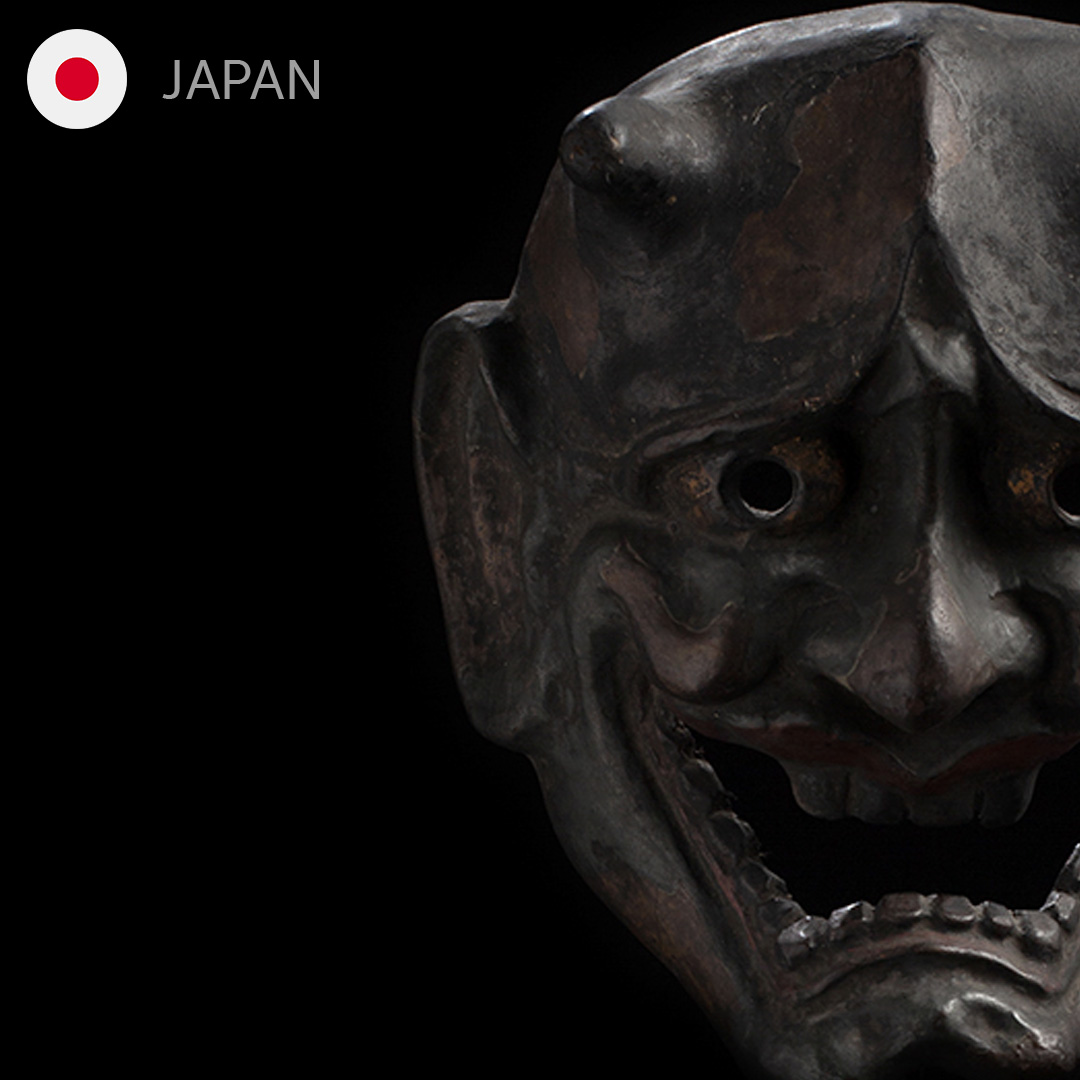
Japan has a long tradition of meticulous historical recordkeeping, supported by archaeological evidence and cultural works that have been carefully preserved. This allows for the precise determination of the age and provenance of most masks. The Japanese masks displayed at MOCA BANGKOK date from the Edo period (approximately 1600–1868 C.E. / พ.ศ. 2143–2411) and the Meiji period (approximately 1868–1912 C.E. / พ.ศ. 2411–2455), eras in which masked theatrical arts flourished. These performances are divided into three principal categories associated with festivals and religious ceremonies.
Namahage and Bugaku
Namahage refers to fearsome ritual spirits (kami) who appear during New Year festivities to frighten lazy or misbehaving children into correcting their behavior. Bugaku is a refined court dance-drama that is still performed within the Imperial Palace. Its character masks often depict heroic and virtuous princes. The specific dance associated with these heroic figures is called Ranryō-ō (Ranryo), featuring masks such as Shikami and Kitoku.
Gigaku
Gigaku is considered the earliest masked performance tradition in Japan. It is believed to have entered Japan from southeastern China in the seventh century C.E., with deeper roots extending back to India and transmitted via the Silk Road to China, Japan, and Korea. The wooden masks of Gigaku embody the cultural links that once connected distant civilizations. The Gigaku performance tradition continued until around 1192 C.E. (พ.ศ. 1735) before gradually disappearing. Today, most surviving masks are preserved in temples and museums.
Nō Theater
Nō is a musical drama that integrates the elegant movement vocabulary of the aristocracy with elements of folk performance. Its themes revolve around tragedy, guardian deities, or the expulsion of malevolent forces. The Hannya mask, representing a woman consumed by jealousy and transformed into a vengeful demon, is one of its most iconic forms.
The Hanakobu Akujō mask (an important “old man” mask type) is a form of Nō mask documented since the fourteenth century C.E. The origins of Nō date back to the Muromachi period (室町時代 / Muromachi) (approximately 1336–1573 C.E.), emerging from ritual chant and dance devoted to the gods. It subsequently developed into a highly cultivated theatrical form that has been continuously preserved and is now recognized as one of Japan’s oldest and most esteemed cultural heritages.
In Nō, the shite (principal actor) wears a mask throughout the performance, never revealing the true face, while the waki (supporting actors) remain unmasked. Because Nō masks have only narrow eye openings, visibility is greatly restricted. Performers must rely on intense concentration to maintain balance and orientation, using the stage pillars as reference points. This physical challenge necessitates suriashi—the slow, deliberate, and meditative sliding walk that has become the hallmark of Nō. This disciplined physicality resonates deeply with Zen Buddhist philosophy, emphasizing inner stillness, awareness of the present moment, and the release of human attachments.
